Red centre,
river and atoll.
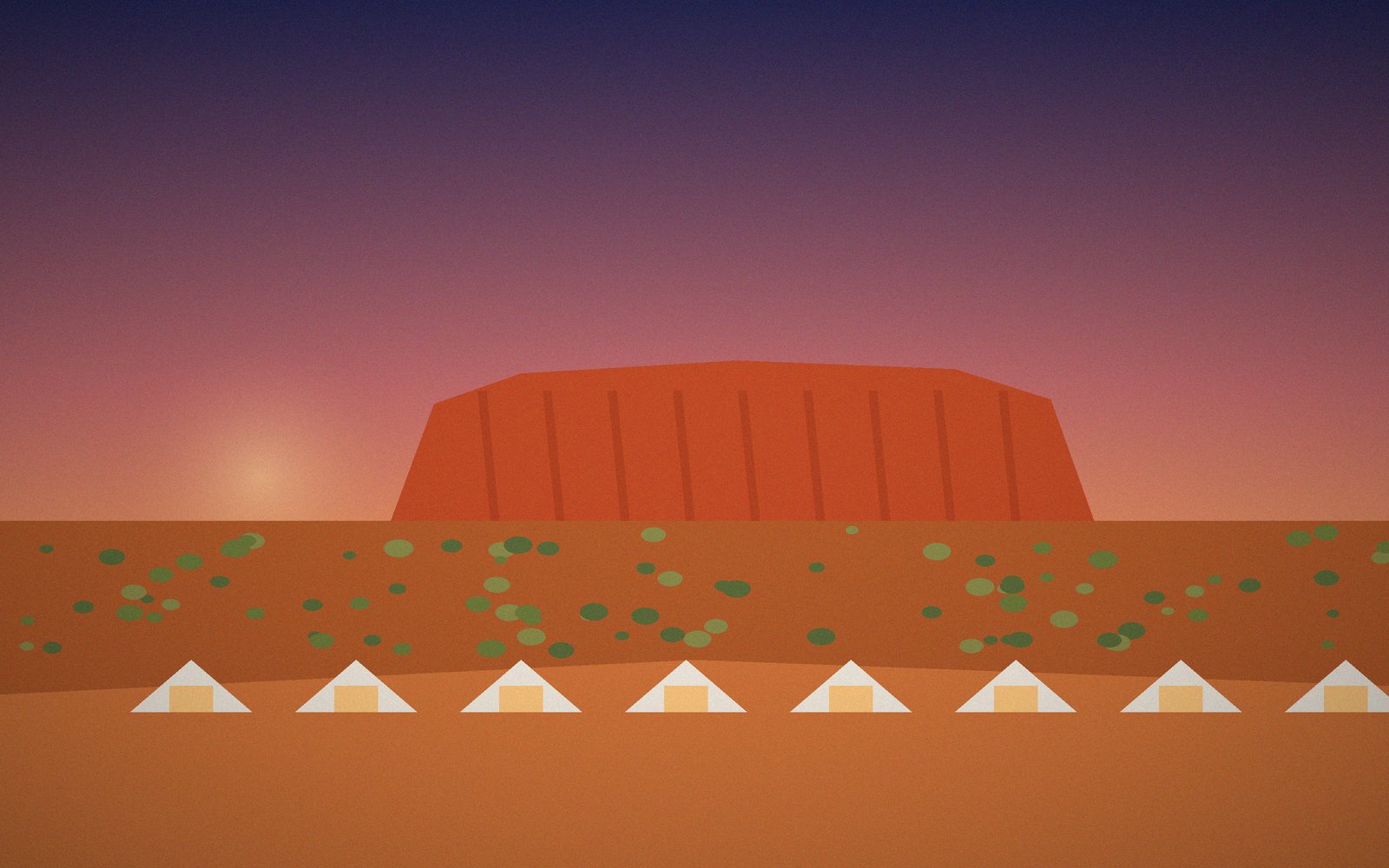
Tents facing Uluṟu in Australia's red centre, a fishing lodge beside New Zealand's Waikato River, and an eco resort on Marlon Brando's atoll in French Polynesia. This guide covers reversed seasons, long distances, Indigenous and Māori culture, food and how to plan a once-in-a-lifetime journey.
- Countries
- Australia, New Zealand, French Polynesia (France)
- Currencies
- Australian dollar · New Zealand dollar · CFP franc
- Languages
- English, Māori, French, Tahitian; Aṉangu languages at Uluṟu
- Time zones
- UTC+9:30 (Uluṟu), UTC+12 (NZ), UTC−10 (Tahiti)
- Power
- 230V Type I (Australia, NZ); 220V Type E (French Polynesia)
- Best months
- Uluṟu: May to September · NZ: December to March · Tahiti: May to October
- Between hotels
- Long flights; Sydney or Auckland are the natural hubs
- Entry
- Australia ETA or eVisitor, NZeTA for New Zealand; French rules for Tahiti
The ends of the earth
Oceania is the long-haul trip of a lifetime, and these three hotels each show a very different face of it.
Longitude 131° places sixteen tents on a dune facing Uluṟu, the great sandstone monolith sacred to the Aṉangu people. Huka Lodge began as a fishing camp on the Waikato River near Lake Taupō and is now one of New Zealand's most loved lodges. The Brando sits on Tetiaroa, an atoll north of Tahiti where conservation and luxury share the same lagoon.
Distances are vast. Allow at least two weeks, and don't try to fit everything in: one long stay in each place is better than many short ones.
Who this region suits: honeymooners, nature lovers, hikers, anglers and travellers interested in Indigenous and Polynesian culture.
When to go
Seasons are reversed from Europe and North America, and each destination has its own sweet spot.
- Uluṟu: May to September brings cool, clear days and cold nights. Summer (December to February) is very hot, often above 35°C.
- New Zealand: December to March is summer, best for walking the Tongariro Crossing and fishing. Autumn (March to May) is quieter and golden.
- French Polynesia: May to October is the drier season with trade winds. November to April is warmer and wetter, with occasional cyclones.
A trip in September or October works well for all three, with spring in New Zealand.
Getting around
Sydney and Auckland are the hubs. Ayers Rock Airport has direct flights from several Australian cities, and Air Tahiti Nui and others link Papeete with Auckland, Los Angeles, Paris and Tokyo.
| Journey | Best way | Typical time | Note |
|---|---|---|---|
| Sydney to Ayers Rock | Flight | ≈ 3h 30m | Direct services on most days |
| Sydney to Auckland | Flight | ≈ 3h | Many daily services |
| Auckland to Taupō | Flight or car | ≈ 1h / 3h 30m | The drive passes Waitomo and Rotorua |
| Auckland to Papeete | Flight | ≈ 5h | Crosses the date line; you arrive the day before |
| Papeete to Tetiaroa | Private plane | ≈ 20m | Arranged by the resort |
A two-week route
- 1
Uluṟu · 3 nights at Longitude 131°
Fly into Ayers Rock via SydneyUluṟu at sunrise, Kata Tjuṯa and dinner under the stars.
- 2
Sydney · 2 nights
Fly about 3h 30mThe harbour, the Opera House and a coastal walk from Bondi to Coogee.
- 3
Taupō · 4 nights at Huka Lodge
Fly to Auckland, then on to TaupōTrout fishing, the Tongariro Crossing and a day in Rotorua.
- 4
Tetiaroa · 5 nights at The Brando
Fly Auckland to Papeete, then a private planeLagoon, birds and turtles, and complete rest before the flight home.
Customs and etiquette
- Uluṟu: respect Aṉangu wishes. The climb closed in 2019, and some sacred sites must not be photographed.
- Māori culture: at a marae (meeting ground), follow your hosts. The hongi, pressing noses, is a traditional greeting.
- Tipping: not expected in Australia, New Zealand or French Polynesia, though appreciated for great service.
- Biosecurity: Australia and New Zealand have strict rules on food, plants and outdoor gear. Declare everything.
- Sun: UV levels are very high. Use sunscreen, a hat and sunglasses.
What to eat
Bush tucker
Native ingredients such as quandong, wattleseed and finger lime.
Barramundi
A sweet white fish from the north, often grilled.
Hāngī
Meat and vegetables cooked in an earth oven, a Māori tradition.
Pavlova
Meringue with cream and fruit; both countries claim it.
Poisson cru
Raw tuna in lime and coconut milk, the national dish.
Po'e
A baked fruit pudding of banana or papaya with coconut cream.
Places worth adding
Sydney Harbour
The Opera House, Harbour Bridge and ferries to Manly.
Great Barrier Reef
Snorkel and dive from Cairns or the Whitsundays.
Rotorua
Geysers, mud pools and Māori cultural evenings.
Queenstown and Milford Sound
Fjords, mountains and adventure sports.
Mo'orea
Jagged peaks, pineapple plantations and lagoon snorkelling.
Bora Bora
The famous lagoon around Mount Otemanu.
Three houses across the Pacific
Open any tab to read the full dossier: rooms, a three-day plan, dining, experiences, transfers, climate and local know-how.
The Oceania hotels compared
Oceania: frequently asked
How long do I need?
At least two weeks to see all three without rushing. Each place deserves three to five nights.
When is the best single time for all three?
September or October works well: cool days at Uluṟu, spring in New Zealand and the dry season in Tahiti.
Can I climb Uluṟu?
No. The climb closed permanently in 2019 at the request of its traditional owners.
Is the date line confusing?
Flying east from New Zealand to Tahiti, you arrive the previous day. Double-check hotel dates when booking.
Are these hotels suitable for families?
Huka Lodge and The Brando welcome children; Longitude 131° is better suited to adults and older children.
Do I need a visa?
Many visitors need an ETA or eVisitor for Australia and an NZeTA for New Zealand. French Polynesia follows French entry rules.